FACTORY NETWORK BUSINESS CONFERENCE

In a volatile global economy, navigating complex regulations and trade disputes is a major challenge for businesses. Mastering international trade law is the essential solution to mitigate legal risks and secure cross-border growth. In this expert guide, FBC ASEAN breaks down the fundamental principles of global commerce regulations, providing the strategic clarity needed to ensure compliance and thrive in the competitive international marketplace.
What is International Trade Law?
International trade law encompasses the rules, agreements, and legal principles governing cross-border commerce between nations. It establishes the framework for how countries conduct trade, resolve disputes, and protect their economic interests while promoting global commerce. The legal foundation rests on multilateral agreements administered by the World Trade Organization, regional trade agreements like EVFTA and CPTPP, and bilateral treaties between specific countries.

The role of the WTO in International Trade Law
The World Trade Organization serves as the primary institution governing international trade law globally. The WTO performs three critical functions that directly impact your sourcing decisions. It administers trade agreements, providing the legal framework within which member nations conduct commerce. It serves as a forum for trade negotiations, where countries negotiate reduced tariffs and improved market access.
Under Article 3 of the Dispute Settlement Understanding, the WTO system “serves to preserve the rights and obligations of Members under the covered agreements, and to clarify the existing provisions of those agreements.” This mechanism has handled over 600 disputes since 1995, providing crucial precedents that shape how trade rules apply in practice.
Regulations on International Trade in goods
Trade in goods operates under detailed regulations that determine what you pay, what documentation you need, and how your products qualify for preferential treatment.
Tariffs and Non-Tariff barriers
Tariff barriers include customs duties calculated as percentages of declared value (ad valorem), fixed amounts per unit (specific duties), or combinations of both. Vietnam’s import tariff schedule contains over 10,000 tariff lines, each with different rates depending on product classification and origin.
Non-tariff barriers encompass quotas limiting import quantities, licensing requirements controlling who can import specific products, and technical barriers to trade including product standards and testing requirements. The WTO Agreement on Technical Barriers to Trade (TBT) requires that these measures “are not prepared, adopted or applied with a view to or with the effect of creating unnecessary obstacles to international trade.”
Trade defense measures
When domestic industries face injury from imports, countries may impose trade defense measures including anti-dumping duties, countervailing duties, and safeguard measures.
- Anti-dumping Duties: Imposed on products sold below fair market value (per GATT Article VI) that cause material injury to domestic industries; Vietnam has faced 238 such cases, largely in steel and seafood.
- Countervailing Duties: Designed to offset unfair government subsidies provided to exporters, as governed by the WTO Agreement on Subsidies and Countervailing Measures.
- Safeguard Measures: Temporary emergency protections triggered by sudden import surges that threaten serious injury; unlike anti-dumping, these apply to all imports and often require compensation to trading partners.
Rules of origin
Rules of origin determine where a product legally originates for customs purposes. They serve as the gatekeeper for preferential tariff treatment under FTAs.
Under EVFTA, most products require 40% regional value content or specific production requirements to qualify for preferential rates. Incorrect origin declarations can result in duty recovery, penalties up to 300% of evaded duties under EU law, and potential criminal charges.
>> Read more: What is Fair Trade? A Manufacturer’s Guide to Fair Trade Certification and Market Access in ASEAN
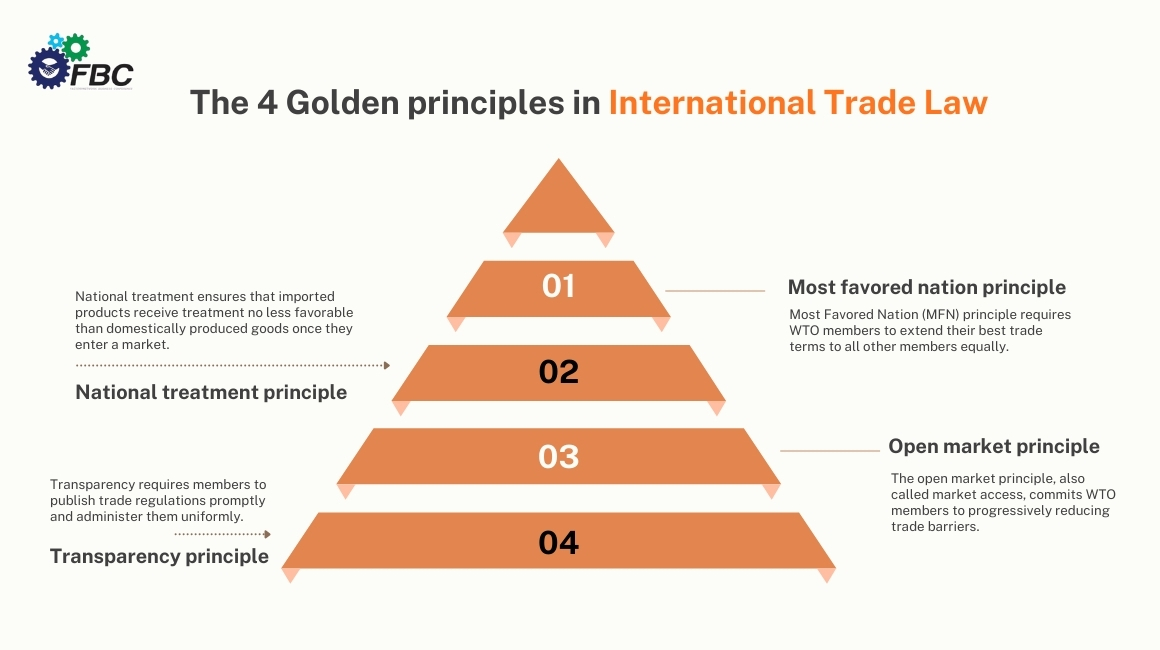
The 4 Golden principles in International Trade Law
Four fundamental principles underpin the entire WTO system and shape how nations must treat each other’s products and businesses.
1. Most favored nation principle
Most Favored Nation (MFN) principle requires WTO members to extend their best trade terms to all other members equally. Article I of GATT 1994 states that “any advantage, favour, privilege or immunity granted by any contracting party to any product originating in or destined for any other country shall be accorded immediately and unconditionally to the like product originating in or destined for the territories of all other contracting parties.”
2. National treatment principle
National treatment ensures that imported products receive treatment no less favorable than domestically produced goods once they enter a market. Article III of GATT 1994 prohibits discriminatory internal taxes, regulations, and requirements that would disadvantage imports.
3. Open market principle
The open market principle, also called market access, commits WTO members to progressively reducing trade barriers. Through successive negotiating rounds, members have reduced average tariffs from over 40% in 1947 to approximately 9% today.
Vietnam’s WTO accession required eliminating import quotas on most products within transition periods. Today, Vietnamese import restrictions primarily exist for legitimate policy reasons like protecting public health or national security, as permitted under GATT Article XX.
4. Transparency principle
Transparency requires members to publish trade regulations promptly and administer them uniformly. Article X of GATT 1994 mandates that “laws, regulations, judicial decisions and administrative rulings” affecting trade be “published promptly in such a manner as to enable governments and traders to become acquainted with them.”
International Trade Law Framework in Vietnam
Vietnam’s integration into global trade systems creates specific opportunities and compliance requirements for international buyers.
Vietnam’s WTO commitments and compliance
Vietnam’s WTO accession protocol established binding commitments across tariffs, services, and trade-related regulations. Tariff commitments have been fully implemented, with bound rates averaging 11.5% and applied rates often lower. Vietnam’s 2023 MFN tariff schedule shows complete alignment with accession promises. Services liberalization has opened banking, telecommunications, and distribution to foreign participation under agreed schedules.
Vietnam’s FTA network and preferential trade regimes
Vietnam has signed 16 free trade agreements providing preferential access to markets representing over 60% of global GDP. Key agreements include:
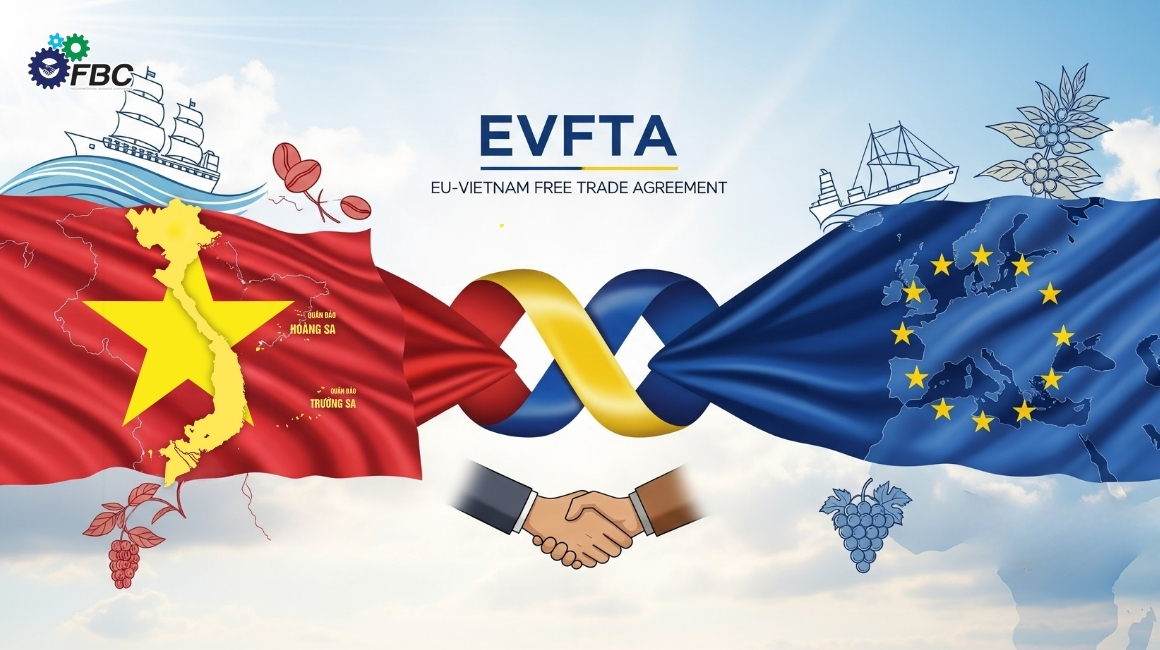
- EVFTA (EU-Vietnam Free Trade Agreement): Effective August 2020, eliminates 99% of tariff lines. European imports now enter Vietnam duty-free for most industrial products. Vietnamese exports to the EU face zero tariffs on textiles after 7 years and electronics immediately.
- CPTPP (Comprehensive and Progressive Agreement for Trans-Pacific Partnership): Connects Vietnam with Japan, Canada, Australia, and other Pacific nations. Eliminates tariffs on 95% of products with full implementation by 2033.
- RCEP (Regional Comprehensive Economic Partnership): The world’s largest FTA covering 30% of global GDP. Harmonizes rules of origin across ASEAN, China, Japan, Korea, Australia, and New Zealand.
Legal framework for international buyers and suppliers
- Investment & Enterprise Law: Under Law No. 61/2020/QH14 and subsequent 2024-2025 amendments, foreign investors benefit from streamlined digital licensing via the National Investment Information System, reducing administrative delays for manufacturing projects.
- Customs & Import-Export Duties: Decree 08/2015/ND-CP (updated through 2024) mandates precise tariff classification and value declaration; compliance is now strictly monitored via automated risk-assessment AI to facilitate faster “Green Channel” clearance for reputable firms.
- Next-Gen FTA Compliance: Operations must strictly adhere to Rules of Origin (RoO) under EVFTA, CPTPP, and RCEP to qualify for preferential tariffs; this includes.
Customs procedures and trade facilitation
Vietnam Customs operates under Customs Law No. 54/2014/QH13, implementing the WTO Trade Facilitation Agreement. Key provisions include:
- Advance rulings: Importers can request binding decisions on tariff classification and origin before shipping. Article 28 requires customs authorities to respond within 30 days.
- Risk-based processing: Green channel clearance for compliant traders allows release within 24 hours. Authorized Economic Operator (AEO) status provides additional facilitation benefits.
Compliance requirements for cross-border trade
Successful sourcing from Vietnam requires attention to specific compliance elements.
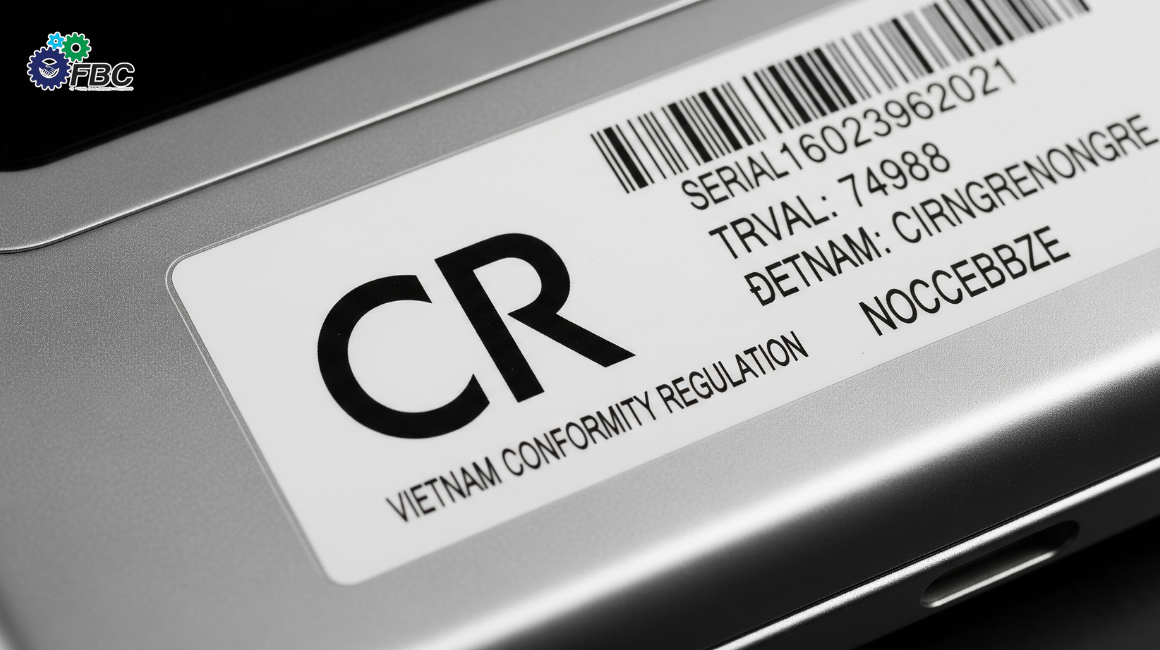
- Product certification: Many products require Vietnam conformity marks (CR mark) or technical approval before import. Electronics must meet QCVN standards; food products need Food Safety registration.
- Documentation: Every shipment requires commercial invoice, packing list, bill of lading, and certificate of origin for preferential treatment. Incorrect documentation delays clearance and may forfeit FTA benefits.
- Sanctions compliance: International buyers must verify Vietnamese suppliers do not appear on restricted entity lists. Due diligence requirements vary by buyer country jurisdiction.
The relationship between International Trade and Business Law
International trade and business law intersect at every transaction point. While trade law governs country-to-country relationships, business law addresses the commercial arrangements between actual trading parties.
- International Sales Contracts: Contracts with Vietnamese suppliers default to the CISG (UN Convention on Contracts for the International Sale of Goods), which governs rights and obligations unless specifically excluded in writing.
- Incoterms 2020 in Business Law: These rules define the transfer of risk and costs; FOB (risk transfers at the ship’s rail in Vietnam) and CIF (seller provides insurance and freight to the destination) are the most widely used terms.
- Business Dispute Resolution: Parties typically favor Commercial Arbitration (such as VIAC or SIAC) over litigation to ensure confidentiality and enforceable final awards under the New York Convention.
Frequently asked questions (FAQ)
1. What is the WTO international trade law?
WTO international trade law is a system of multilateral agreements that governs trade in goods, services, and intellectual property among 160+ member nations. It provides a mandatory Dispute Settlement Mechanism to resolve trade conflicts and sets the legal limits for tariffs, subsidies, and administrative barriers to trade.
2. What are the principles of international trade law?
The core principles include Most-Favored-Nation (MFN) treatment, which prevents discrimination between trading partners, and National Treatment, which requires that foreign goods be treated no less favorably than domestic ones.
3. How can manufacturers in Vietnam qualify for FTA tariff preferences?
Your product must meet Rules of Origin requirements — typically 40% local value-added under ATIGA or RCEP. Obtain the correct Certificate of Origin from VCCI or the Ministry of Industry and Trade before shipment.
4. What are the most common customs issues that delay shipments from Vietnam?
The most frequent causes are incorrect HS codes, invalid Certificates of Origin, and incomplete documentation. Products in regulated categories may also face TBT or SPS compliance checks that extend clearance time significantly.
5. What documents are essential to avoid losing preferential tariff benefits?
Always prepare your Certificate of Origin (Form D, Form E, or EUR.1), commercial invoice, packing list, and bill of lading. Missing any one document can result in full standard tariff rates being applied.
6. How does Vietnam’s anti-dumping law protect local manufacturers, and what should exporters know?
Vietnam allows domestic industries to file anti-dumping petitions against unfairly priced imports. Exporters entering Vietnam should maintain transparent pricing documentation. Vietnamese exporters should also monitor trade remedy measures in the US, EU, and India.
7. What compliance requirements apply to cross-border trade between Vietnam and ASEAN countries?
ATIGA and RCEP govern intra-ASEAN trade. Exporters must submit Form D to access preferential tariffs. The ASEAN Single Window enables electronic Certificate of Origin submission, while Mutual Recognition Arrangements reduce duplicated testing across member states.
8. Where can manufacturers and buyers find support for navigating international trade regulations in Vietnam?
VCCI, the Ministry of Industry and Trade, and customs advance ruling services are key resources. FBC ASEAN seminars also connect manufacturers directly with legal advisors and international buyers experienced in Vietnam’s trade regulations.
International trade law might seem abstract until customs hold delays your critical shipment or unexpected duties destroy your product margins. Understanding these principles positions you to ask the right questions when evaluating suppliers. Stay updated with the latest market trends and regulatory shifts by following the FBC ASEAN website for the most reliable industry insights.
Concerned About Legal Compliance When Sourcing from Vietnam?
You don’t need to become a trade law expert-you need suppliers who already are.
FBC ASEAN connects you with Vietnamese manufacturers who navigate:
- FTA rules of origin (EVFTA, CPTPP, RCEP)
- Customs documentation (C/O, packing lists, invoices)
- Product certifications (CE, RoHS, FDA equivalents)
- IP protection under Vietnam’s international commitments
Meet compliance-ready suppliers in 3 days instead of 3 months of vetting.
👉 Join as a buyer-completely: