 FACTORY NETWORK BUSINESS CONFERENCE

The market for sustainable packaging materials is becoming a strategic priority for manufacturers, brand owners and buyers who want packaging that protects both products and the planet. FBC ASEAN connects packaging and manufacturing businesses across Vietnam and ASEAN, providing insights into sustainable packaging opportunities, regulations, and future trends.
What are sustainable packaging materials?
Sustainable packaging materials are solutions that minimise environmental impact across their whole life cycle while still protecting products during storage, transport and use. They are designed to use fewer resources, cut down emissions, and easily transition into recycling, composting, or reuse.
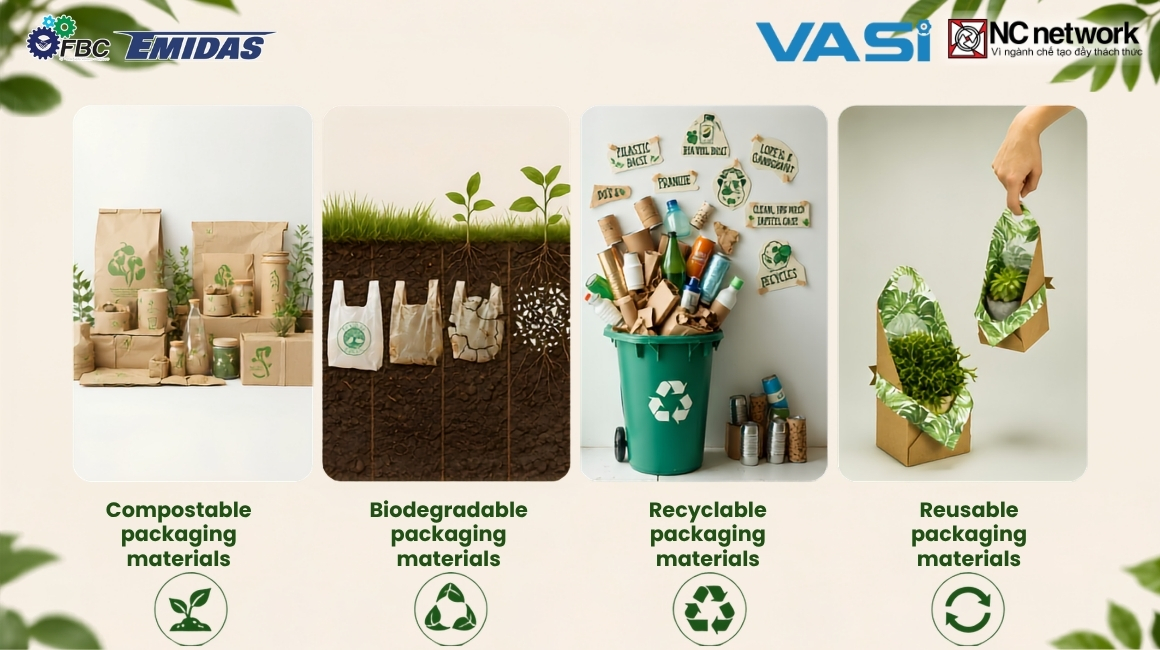
There are several types of sustainable packaging materials available today, and each has unique characteristics:
- Biodegradable packaging materials: This category covers options that naturally decompose through microorganisms over time, returning to environmental cycles. Widely used for bags, films, and single-use items to replace conventional plastics, their actual environmental impact still relies heavily on climate, disposal habits, and local waste infrastructure.
- Compostable packaging materials: These materials are designed to break down completely into water, carbon dioxide, and biomass under controlled composting conditions, leaving no harmful residues. They are ideal for food service and flexible packaging, though their real-world impact depends on the availability of organic waste treatment systems.
- Recyclable packaging materials: This segment features solutions capable of being collected and reprocessed into new products within functional recycling streams. Common for boxes, cans, and bottles, their true circularity relies heavily on established local sorting and collection infrastructure.
- Reusable packaging materials: Durable formats designed for multiple circulations replace single-use disposal to significantly minimize long-term waste. Implementing these systems effectively requires reliable logistics, thorough cleaning operations, and active user participation.
Below is a list of sustainable packaging materials with indicative cost levels and typical applications. Specific prices will vary by region, volume and supplier:
- Paper and cardboard: Low to medium cost, suitable for boxes, sleeves, cartons and transport packaging, and already supported by established recycling streams in Vietnam.
- Recycled paper and board: Medium cost, preferred for branded retail and e-commerce packaging where sustainability messaging and traceable recycled content are important.
- Bioplastics such as PLA and PBAT: A medium-to-high-cost sustainable packaging material, used in films, trays and cups for food and beverages, often selected to meet export standards and internal ESG goals.
- Starch-based materials: A medium-cost option for flexible packaging, single-use items and disposable food service products, effective in defined applications but dependent on appropriate end-of-life routes.
- Glass: Higher material and transport cost, offering strong barrier properties and a premium look for drinks and cosmetics, with sustainability results tied to local reuse and recycling programs.
- Aluminium: Medium to high material cost, valued for excellent recyclability and low weight in beverage cans and high barrier uses, aligning well with circular economy targets of global brands.
- Recycled plastics such as rPET and rHDPE: Medium cost, used in bottles and containers where functional performance must be balanced with verified recycled content percentages.
Current state of sustainable packaging materials in Vietnam
Vietnam is gradually moving from pilot projects to broader adoption of sustainable packaging materials, influenced by policy, export market expectations and domestic consumer trends.
Opportunities for new sustainable packaging materials
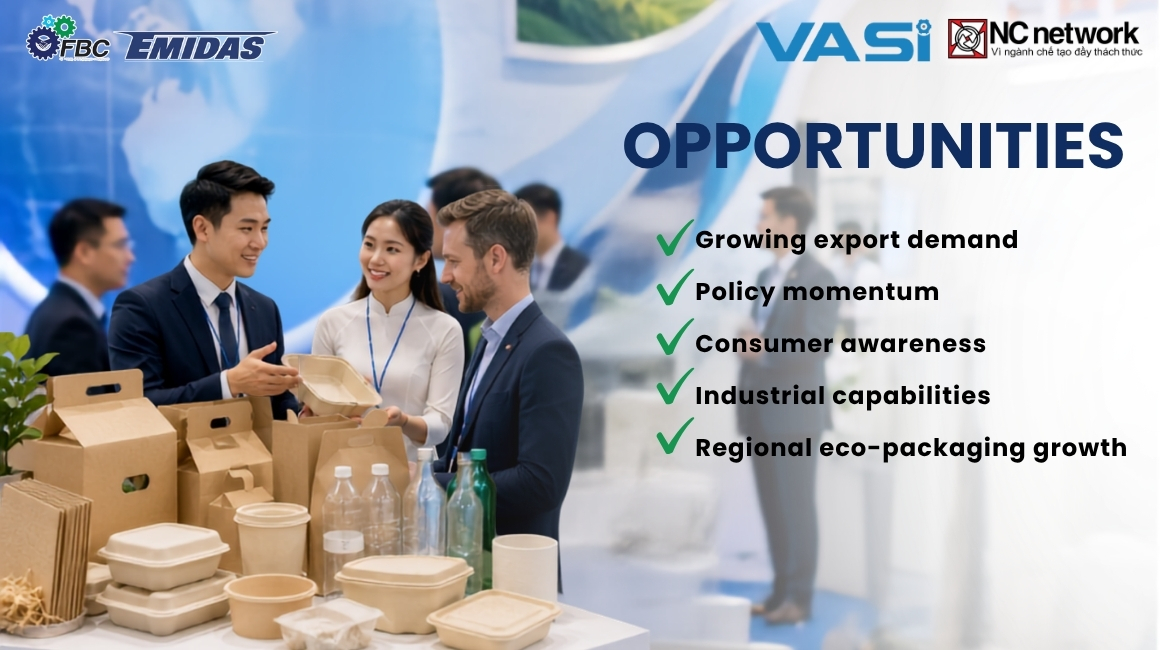
Vietnam’s green shift in production and regulation is opening real opportunities for companies that upgrade their packaging:
Growing export demand
International buyers in food, beverage and FMCG increasingly ask for lower impact packaging, creating room for Vietnamese manufacturers to improve formats and win higher value contracts. According to IMARC Group’s Vietnam Green Packaging Market report, the country’s green packaging segment reached roughly USD 1.13 billion in 2025 and is expected to keep growing steadily toward 2034.
Policy momentum
Environmental laws, Extended Producer Responsibility and plastic reduction plans push businesses to redesign packs earlier, turning compliance into a source of competitive advantage. Evidence from Moitruongachau (2023), Decision No. 3257/QD-BTNMT dated November 07, 2023 of the Ministry of Natural Resources and Environment requires biodegradable plastic packaging to reach at least 90% biological degradation within 2 years, and recyclable packaging to contain a minimum of 20% recycled material.
Consumer awareness
Urban customers pay more attention to eco-friendly choices, giving brands space to strengthen positioning through visible material changes. As reported by Vietnam News (2025), a 2024 survey by Vietnam Report found that 92.1% of consumers were concerned about the environmental impact of packaging, an increase from previous years.
Industrial capabilities
A large packaging base and access to agricultural by-products make it easier to develop bio-based papers, bioplastics and other innovative materials at scale. FiinGroup (2022) reported that Vietnam’s plastics sector was valued at USD 17.5 billion in 2019 and contributed nearly 7% to national GDP, establishing a robust manufacturing base for material innovation.
Regional eco packaging growth
Rising demand across ASEAN allows Vietnam to become a regional supplier of greener packaging solutions and components. According to Vietnam News (2025), the paper packaging market is expected to grow from USD 2.6 billion to USD 4.14 billion by 2029.
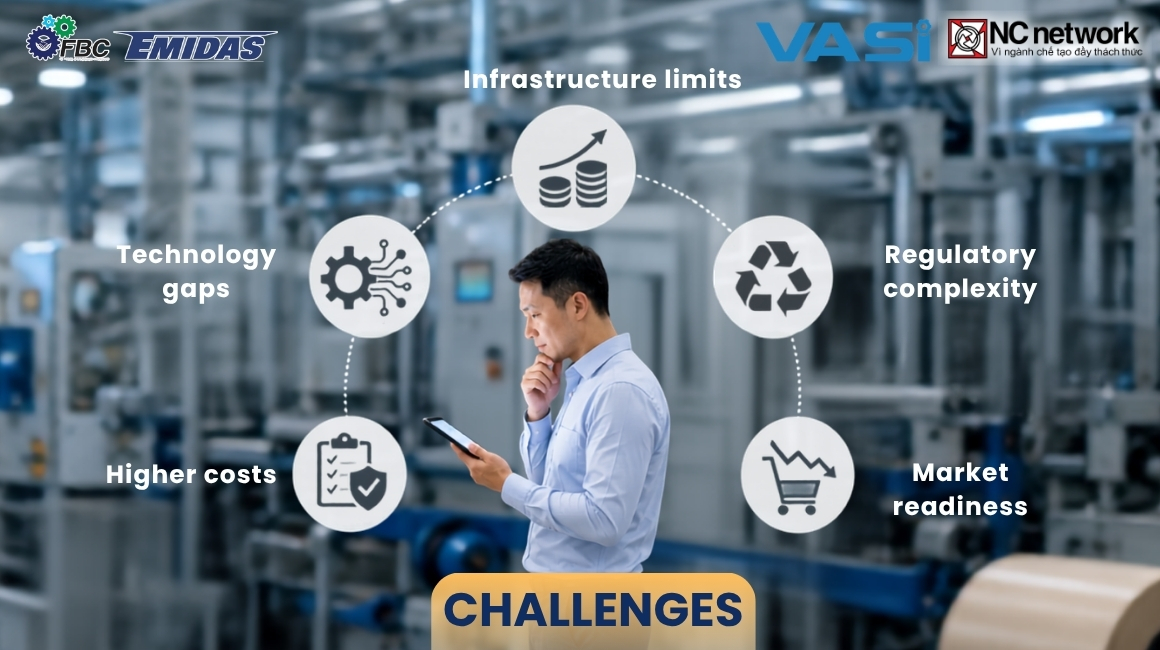
Challenges in adopting sustainable packaging materials
At the same time, businesses face practical obstacles when moving from conventional to more sustainable formats:
Higher costs
Biodegradable packaging materials such as bioplastics typically cost more than traditional petroleum-based plastics. Based on Reliance Pak (2026), biodegradable packaging costs 15 to 40% more than traditional plastic packaging at the point of purchase, which is difficult for SMEs without clear cost sharing.
Technology gaps
Existing lines and processes are optimised for standard plastics and mixed structures, so switching materials may require new equipment, tooling and quality control routines. Data from Duy Tan Recycling (as cited in B&Company, 2024) points out that the material loss rate from collected recyclable inputs can reach nearly 40%, highlighting the technical difficulty of processing alternative materials at scale.
Infrastructure limits
Recycling and composting systems are uneven across regions, reducing the real impact of recyclable or compostable packaging in some markets. A study by the World Bank (2025), only about 33% of key plastic resins in Vietnam were recycled, while roughly 75% of material value, worth USD 2.2 to 2.9 billion annually, is lost due to insufficient recycling infrastructure.
Regulatory complexity
Companies must follow evolving rules and reporting on waste and EPR, which increases compliance workload and demands better data on each packaging material. As claimed by GRAC (2026), an FMCG brand releasing 500 tons of multi-material flexible plastic packaging onto the market faces an annual EPR compliance cost of approximately VND 1.2 billion (USD 48,000).
Market readiness
Some buyers and end users remain highly price-sensitive, slowing demand for greener options until regulations tighten or eco-products become more mainstream. According to Vietnam News (2024), citing the Green Consumer Survey, only 12-18% of consumers in major Vietnamese urban centers frequently purchase eco-friendly products, as the majority are willing to accept a modest price premium of just 5-10%.
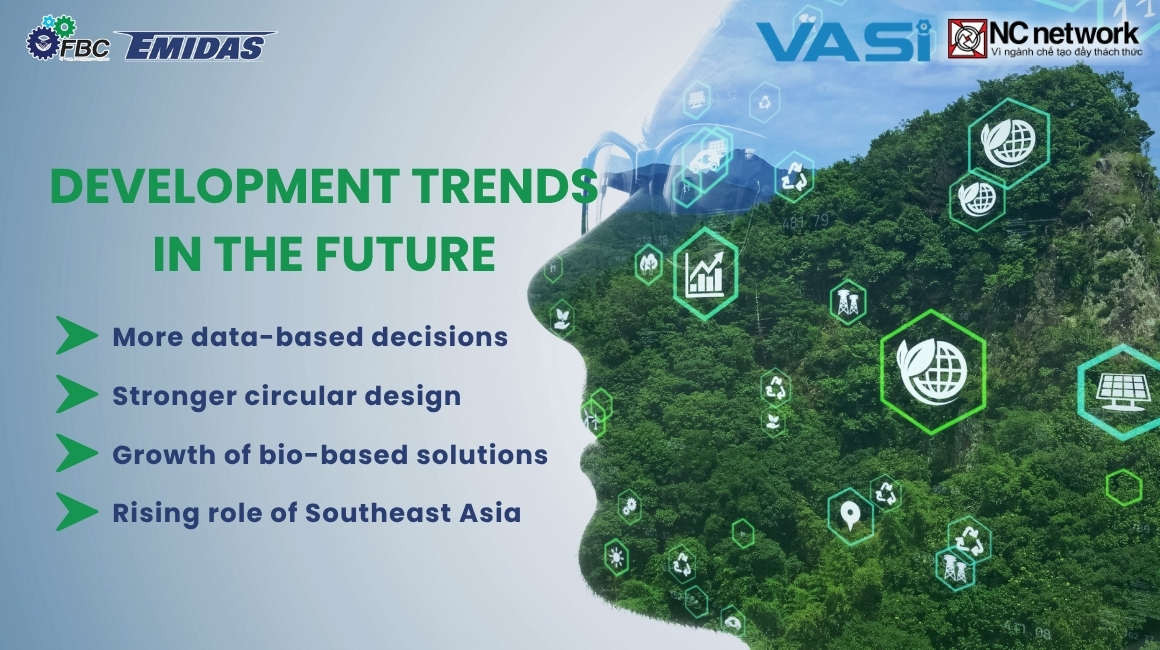
Development trends of sustainable packaging materials in the future
In the next few years, sustainable packaging materials will follow several clear directions that manufacturers and buyers should pay attention to:
More data-based decisions
Textile Exchange’s Materials Benchmark Insights and Trends 2025 report demonstrates that companies increasingly prioritize verified material data over generic claims. Brands reporting detailed data grew from 57 (2015) to 423 (2025), and certified raw materials usage rose from 58% (2023) to 67% (2024). This same shift toward verified data is now pushing suppliers in packaging to show how each sustainable packaging material performs from production to end of life.
Stronger circular design
According to Packaging Insights (2026), every packaging type placed on the EU market will require a signed Declaration of Conformity, making brands legally responsible for proving that packaging can actually be recovered through real recycling systems rather than relying on supplier certificates alone. Designers therefore need to think about what will happen to packaging after use before choosing materials or formats.
Growth of bio-based solutions
As European Bioplastics (2025) reports, in cooperation with the nova-Institute, global bio-based plastics production capacity is set to nearly double from 2.31 million tonnes in 2025 to 4.69 million tonnes by 2030, with packaging remaining the largest end-use segment at 41.3% of total capacity (2025). These solutions aim to reduce reliance on fossil feedstocks while keeping barrier, strength and safety at levels industry applications require.
Rising role of Southeast Asia
Data from Packaging Market Insights (2026) show that the region’s sustainable and eco-friendly packaging market was valued at approximately USD 99.59 million (2025) and is projected to grow at a CAGR of 7.68% to reach USD 193.62 million by 2034. This opens space for local firms to develop and export sustainable materials for packaging and to co-develop new solutions with international partners.
Businesses mastering sustainable packaging materials, including their challenges, trends, and opportunities, will better meet regulatory demands and market expectations in Vietnam and beyond. Join FBC ASEAN to connect with packaging experts, technology providers, buyers and turn your sustainable packaging strategy into real projects and measurable business growth.