 16~18/09/2026
 VEC, Dong Anh, Ha Noi
Many producers still face unfair prices and unstable working conditions in international trade. Fair trade offers a solution by ensuring transparent practices, fair payment, and sustainable production. In this article, FBC ASEAN explains what fair trade is and how it operates to support both businesses and communities worldwide.
What is Fair Trade?
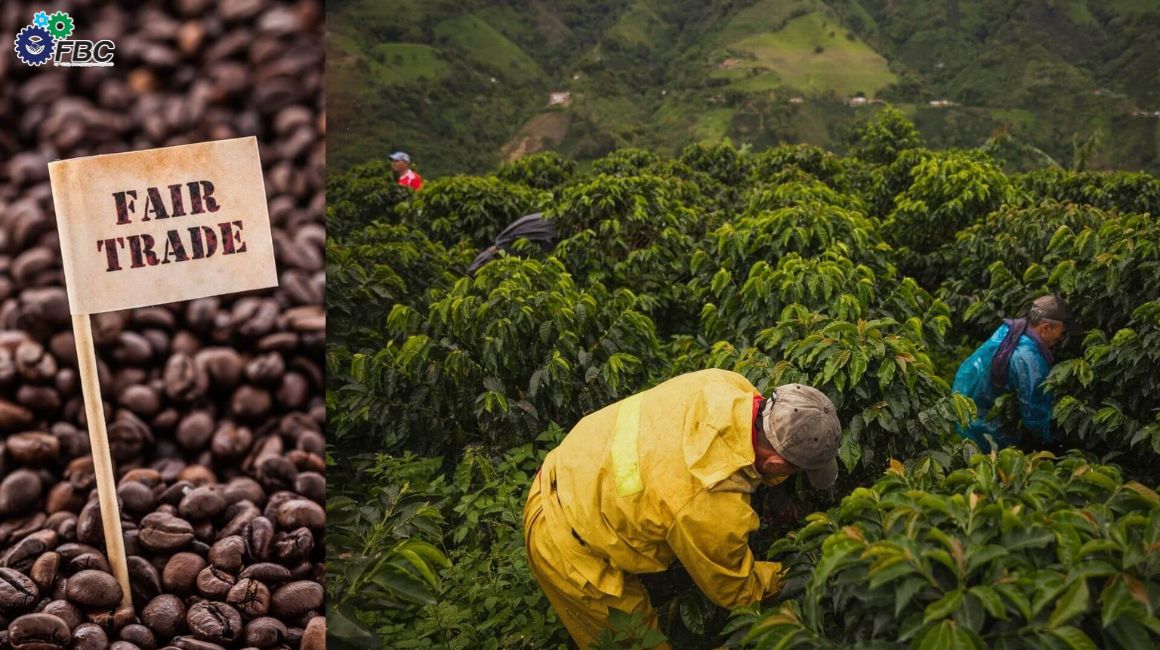
Fair trade is a trading partnership and social movement that aims to achieve greater equity in international trade by ensuring better trading conditions and rights for marginalized producers and workers, particularly in developing countries. The concept goes beyond simple charity, it establishes a structured system where producers receive fair compensation for their goods while meeting specific social, economic, and environmental standards.
How does Fair Trade operate?
Fair trade operates through a structured system combining price guarantees, additional premiums for community development, and rigorous certification processes.
Minimum price mechanism
The minimum price mechanism serves as the foundation of fair trade economics. Fairtrade International sets minimum prices for various commodities based on the cost of sustainable production in each region.
For example, the Fairtrade minimum price for washed Arabica coffee stands at $1.80 per pound (as of 2024), while conventional market prices have historically dropped below $1.00 during crisis periods. During the 2019 coffee price crisis, when market prices fell to $0.93 per pound, fair trade farmers continued receiving the guaranteed minimum, preventing financial ruin for thousands of families.
Price difference
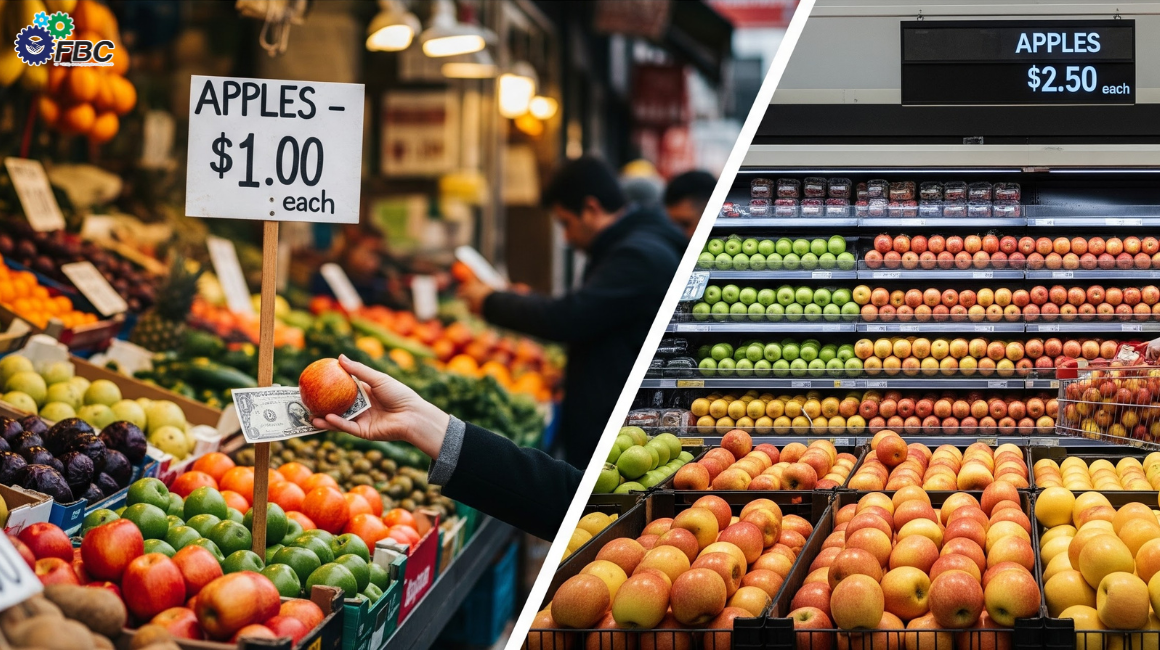
This difference exists because fair trade pricing is designed to cover sustainable production costs, ensure decent incomes, and protect producers from market volatility. While conventional prices often fluctuate and may fall below production costs, fair trade sets a price floor and adds a Fair Trade Premium, which is reinvested in community development, education, or environmental projects.
Fairtrade certification process
The process begins when a producer organization applies to FLOCERT, including documentation about their structure, membership, and production practices. Initial desk reviews assess whether the applicant meets basic eligibility criteria. Organizations must be democratically structured, with small-scale farmers owning their own land or having secure tenure.
The entire certification process typically takes 3-6 months and costs between $2,000-$5,000 depending on organization size and location. While this represents a significant investment for small producers, certified organizations often recoup costs within the first year through premium payments and improved market access.
Fairtrade International global standards
Fairtrade International maintains comprehensive standards covering three dimensions: social, economic, and environmental requirements. These standards apply differently to small producer organizations and hired labor situations, recognizing the distinct challenges each faces.
- Social standards: Fair trade protects workers’ rights through democratic organization, bans child and forced labor, ensures safe working conditions, and guarantees fair wages, reasonable hours, and non-discrimination.
- Economic standards: Fair trade requires transparent, long-term trading relationships, pre-financing when needed, and payment of at least the minimum price plus premium, while preventing restrictive exclusive contracts.
- Environmental standards: Fair trade limits harmful agrochemicals, promotes sustainable farming, protects water resources, and encourages organic practices, even when organic certification is not mandatory.
10 Golden principles of Fair Trade
The World Fair Trade Organization (WFTO) has established ten principles that define fair trade practices. These principles guide certified organizations and provide a framework for businesses seeking to implement ethical sourcing.
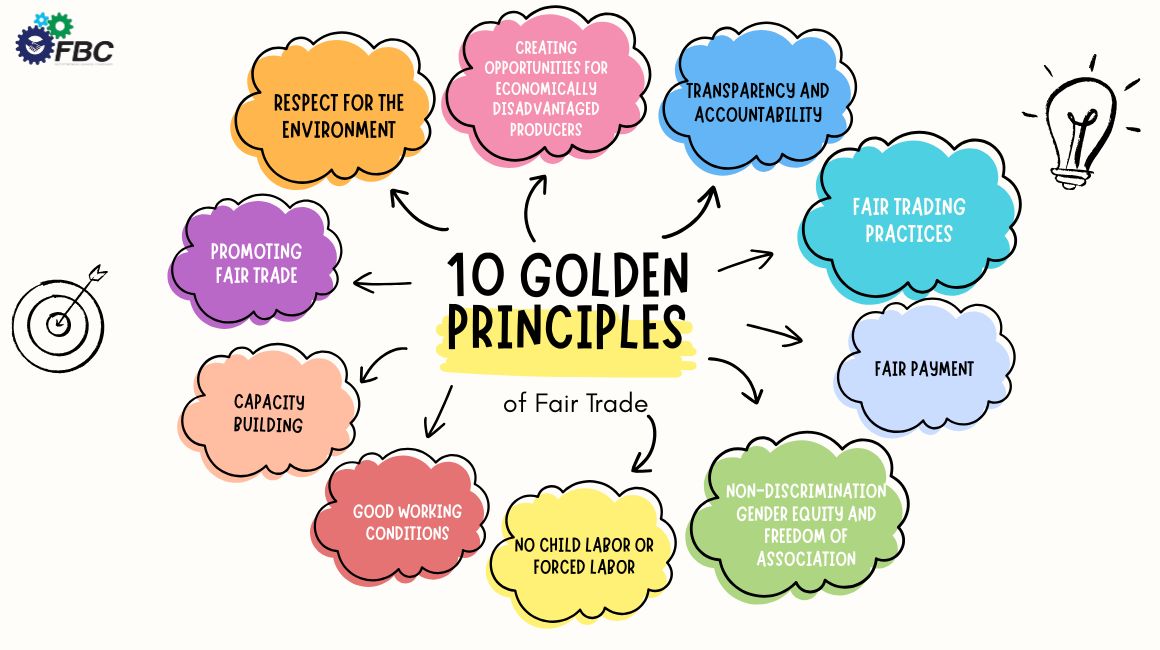
- Principle 1: Creating opportunities for economically disadvantaged producers. Fair trade prioritizes supporting marginalized producers who would otherwise lack market access. This includes smallholder farmers, artisan cooperatives, and workers in developing regions facing systemic poverty.
- Principle 2: Transparency and accountability. All parties in fair trade relationships must maintain open communication about trading conditions, pricing, and organizational decisions. Financial records remain accessible to members and stakeholders.
- Principle 3: Fair trading practices. Buyers commit to long-term relationships, provide advance payment when needed, and never cancel orders without appropriate compensation. Trading terms consider producers’ welfare alongside commercial interests.
- Principle 4: Fair payment. Producers receive prices covering sustainable production costs plus fair living wages. Payment occurs promptly, and pricing discussions involve genuine negotiation rather than unilateral buyer decisions.
- Principle 5: No child labor or forced labor. Organizations must ensure that children’s participation, if any, doesn’t interfere with education or development. All labor must be voluntary, with no debt bondage or human trafficking.
- Principle 6: Non-discrimination, gender equity, and freedom of association. Fair trade organizations don’t discriminate based on race, religion, disability, gender, or political opinion. Women receive equal opportunities and compensation.
- Principle 7: Good working conditions. Working environments must be safe, healthy, and comply with local laws. Working hours must be reasonable, and workers must receive adequate rest periods.
- Principle 8: Capacity building. Fair trade relationships include components helping producers improve skills, management capabilities, and market knowledge. Training programs and technical assistance strengthen long-term sustainability.
- Principle 9: Promoting fair trade. Certified organizations actively raise awareness about fair trade principles and advocate for systemic change in international trade practices.
- Principle 10: Respect for the environment. Sustainable agricultural practices, reduced environmental impact, and responsible resource management are essential requirements, not optional enhancements.
Common Fairtrade product groups
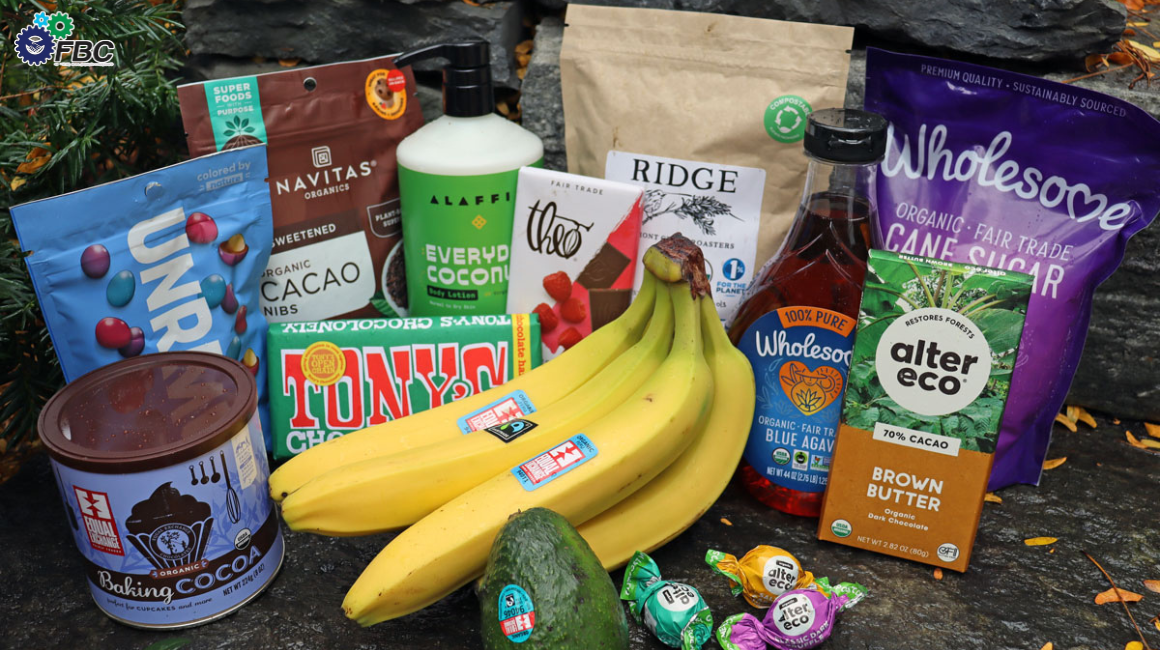
Fair trade certification covers diverse product categories, though agricultural commodities and handcrafted goods dominate the market. Understanding which products carry certification helps businesses identify sourcing opportunities and consumers make informed purchasing decisions.
- Agricultural products: Account for about 90% of fair trade sales, led by coffee, followed by cocoa and bananas. Other certified products include tea, sugar, cotton, fruits, spices, honey, and wine.
- Handicrafts and garments: Handicrafts are mainly certified through WFTO, supporting artisan cooperatives, especially women. The garment sector focuses on fair wages, safe working conditions, and workers’ rights.
- Fairtrade labels: The Fairtrade International label certifies compliant products, WFTO reflects organizational commitment, and Fair Trade USA uses a separate label mainly in the U.S.
How to distinguish between Fair Trade and Trade Fair
Despite similar names, fair trade and trade fair represent completely different concepts. This confusion particularly affects international business professionals who encounter both terms regularly. The following comparison clarifies key distinctions.
| Aspect | Fair Trade | Trade Fair |
| Definition | A certification system and movement ensuring ethical trading conditions for producers in developing countries | A large exhibition event where businesses showcase products and services to potential buyers |
| Primary purpose | Protect marginalized producers through guaranteed prices and ethical standards | Connect businesses for networking, marketing, and commercial opportunities |
| Key participants | Farmers, artisans, certified traders, conscious consumers | Exhibitors, buyers, industry professionals, general public |
| Duration | Ongoing certification and trading relationships | Typically 2-5 day events held annually or periodically |
| Examples | Fairtrade International certification, WFTO membership | FBC ASEAN, Canton Fair, Hannover Messe |
| Business benefit | Ethical supply chain, brand reputation, consumer trust | Lead generation, market research, partnership development |
| Verification | Third-party audits and certification | Event registration and participation |
Frequently Asked Questions (FAQ)
1. What does Fairtrade mean?
Fairtrade means a trading system that promotes fair prices, decent working conditions, and sustainable practices for producers, especially small farmers and workers in developing countries.
2. What is Fair Trading?
Fair trading refers to ethical business practices that ensure transparency, honesty, and fairness in commercial relationships. It focuses on fair pricing, respectful treatment of suppliers and workers, and long-term partnerships rather than short-term profit.
3. What is Fairtrade Labeling?
Fairtrade labeling is a certification system that identifies products meeting Fairtrade standards. The label assures consumers that the product was produced under fair working conditions, paid at fair prices, and follows social, economic, and environmental requirements.
4. What is Fair Trade USA?
Fair Trade USA is an independent certification organization based in the United States. It promotes fair trade through its own standards and labeling system, separate from Fairtrade International, and is mainly active in the U.S. market.
Understanding fair trade principles has become essential for modern businesses navigating increasingly complex global supply chains. The key lies in understanding each concept’s unique benefits and applying them appropriately to your business strategy.
Apply Fair Trade Principles to Manufacturing Sourcing
Meet 800+ manufacturers at FBC ASEAN 2026 who deliver direct relationships, transparent operations, and certified ethical standards (SA8000, ISO 14001, BSCI) – without compromising on cost or quality. Build ESG-compliant supply chains you can be proud of. Follow FBC ASEAN to stay updated with in-depth insights, practical analysis, and the latest trends in international trade and fair trade practices.
👉 Register (international buyers) at: