
 16~18/09/2026
 VEC, Dong Anh, Ha Noi
As the global solar panel industry accelerates projected to grow from $253.69 billion in 2023 to $436.36 billion by 2035 at a 6% CAGR, Vietnam has emerged as a premier production hub for 2026. Join FBC ASEAN as we decode this landscape, helping business leaders optimize their sourcing and market entry strategies.
Overview of the current state of the solar panel industry
The solar panel industry is currently experiencing a fascinating paradox: record-breaking global adoption is occurring simultaneously with severe manufacturing overcapacity and plummeting component prices. As of early 2026, the market has moved past its explosive, unchecked expansion phase and is currently undergoing a critical restructuring and consolidation period.
- Surging Demand vs. Overcapacity: Annual global installations now exceed 600 GW, driven largely by AI data centers and electrification. However, massive prior factory expansions have pushed global manufacturing capacity to nearly double the actual demand.
- Record-Low Prices: This massive oversupply has driven module prices to historic lows (frequently below $0.09/W). While this accelerates global solar adoption, it is forcing intense margin pressure and consolidation among manufacturers.
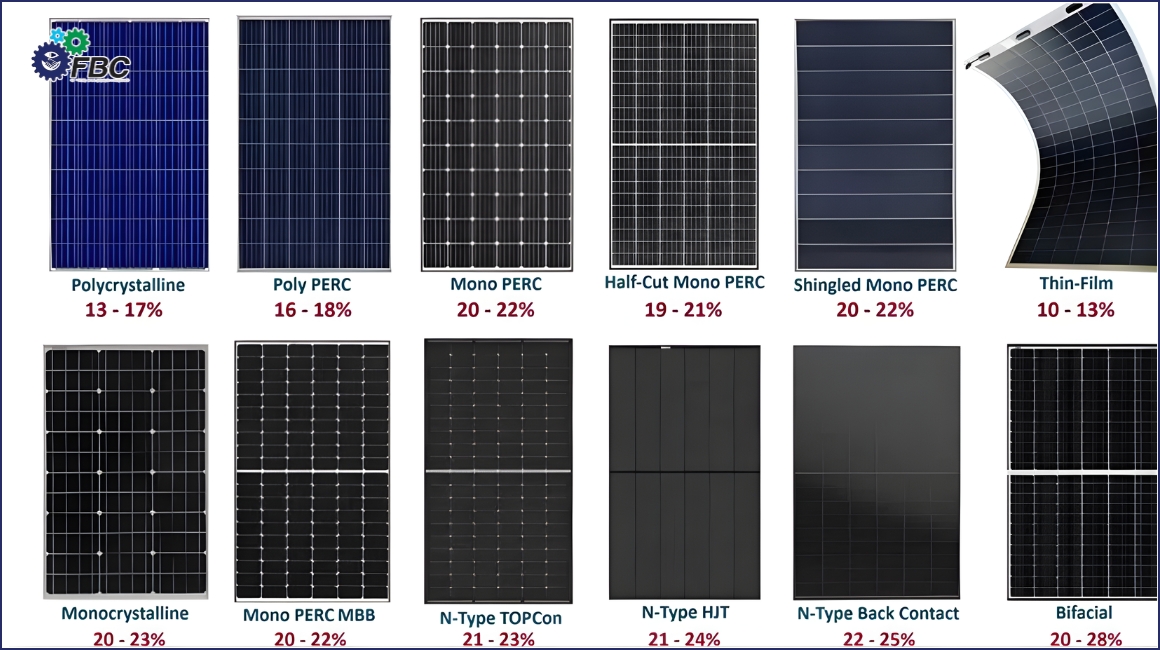
- The N-Type Tech Dominance: To stay competitive, the market has rapidly transitioned to high-efficiency N-type TOPCon cells and large-format bifacial modules (>600W) as the new industry standard.
- Supply Chain Realignment: Geopolitical tariffs and local subsidy policies (like the US IRA) are aggressively accelerating China Plus One strategies, establishing Southeast Asia with Vietnam at the forefront as a critical alternative production hub.
Strategic position and products in Vietnam
Vietnam has rapidly transformed into a global solar manufacturing powerhouse, increasing its production capacity by over 600% in just five years to become the world’s fourth-largest exporter. By leveraging a strategic coastal location, a robust network of 16 Free Trade Agreements, and a sophisticated manufacturing ecosystem, the country has captured 12% of the global market share.
- Exceptional Global Standing: Vietnam remains the world’s fourth-largest solar panel exporter, achieving sustained growth to push its production capacity past 19.5 GW by early 2026. This continued expansion demonstrates the sector’s remarkable resilience and ability to scale rapidly despite fluctuating global supply chain dynamics.
- Strategic Logistics and Trade: With 14 major ports and participation in 16 Free Trade Agreements like the CPTPP and EVFTA, manufacturers enjoy efficient global distribution and preferential tariff access to over 60% of global GDP..
- Diverse Manufacturing Ecosystem: The landscape features a mix of global leaders like Longi Solar, JA Solar, and JinkoSolar alongside innovative domestic firms such as Bamboo Capital and AD Green, creating a comprehensive supply chain from raw materials to final assembly.
- Advanced Technological Capabilities: Local facilities have largely upgraded from standard PERC to next-generation N-type TOPCon and HJT (Heterojunction) panels, which push efficiency rates to an impressive 23–24%.
- Significant Economic Contribution: Continuous Foreign Direct Investment (FDI) into high-tech manufacturing further solidifies this industry as a cornerstone for Vietnam’s broader goal to achieve Net Zero emissions by 2050.
The global development situation
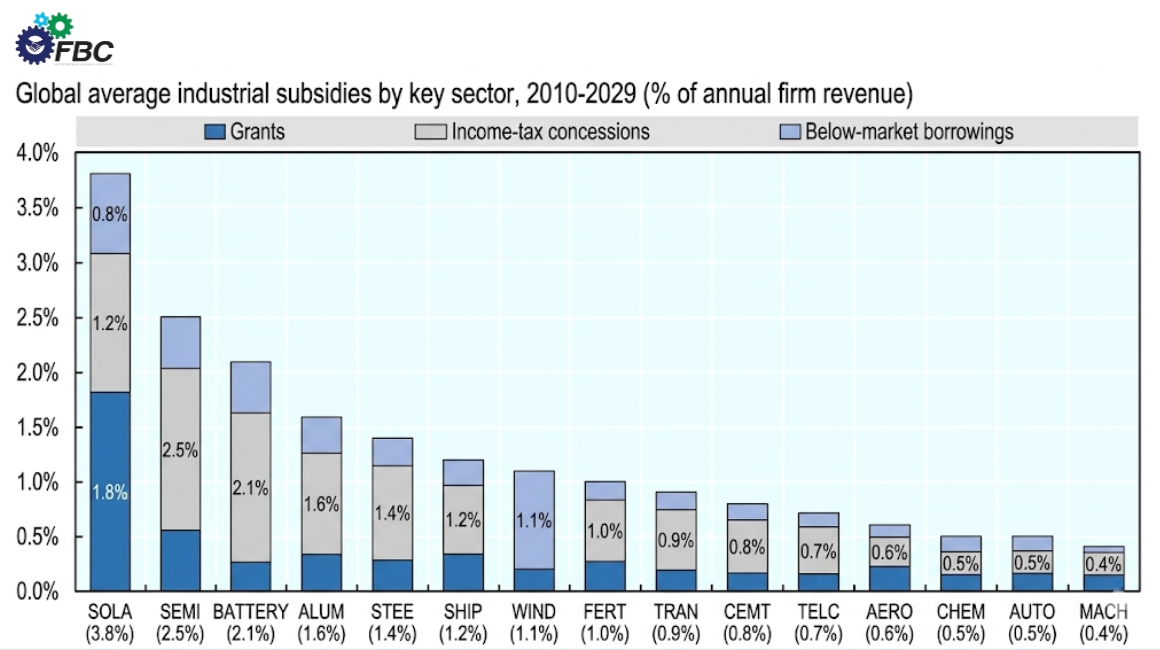
Globally, the solar panel industry has shifted from a capacity build-out phase into an era of intense competition driven by national industrial strategies, subsidies, and trade policies. Major economies are increasingly deploying tax credits and local-content rules to attract manufacturing and protect domestic producers, fundamentally reshaping global trade flows and investment decisions. Key global dynamics impacting manufacturers:
- Policy-Driven Competition: Major markets (Asia, Europe, North America) are aggressively using subsidies and trade policies to build domestic supply chains.
- Growing Market Opportunities: Sustained global demand for utility-scale, commercial, and residential solar is fueled by national net-zero targets and energy security needs.
- Margin Pressures: Oversupply and resulting low module prices are compressing profit margins across the industry.
- Supply Chain Reorganization: Subsidy disputes and trade actions directly influence where new factories are located and how global supply chains are structured.
- Direct Impact on Vietnam: As an export-heavy hub, Vietnam’s solar industry is highly vulnerable to and must rapidly adapt to these shifting global trade rules and subsidy regimes.
Understanding Solar Panel Costs in the Vietnamese Market
Cost competitiveness remains one of Vietnam’s strongest advantages in the global solar panel market, driven by efficient manufacturing processes, favorable labor costs, and strategic supply chain management.
- Factors affecting solar panel price in Vietnam
Solar panel pricing in Vietnam reflects a complex interplay of manufacturing efficiency, raw material costs, and competitive market dynamics. Vietnamese manufacturers benefit from integrated supply chains that reduce raw material transportation costs by approximately 12-15% compared to facilities dependent on long-distance silicon wafer imports.
Labor productivity in Vietnamese solar facilities averages 15-20% higher than regional competitors, partly due to substantial investments in worker training and automated manufacturing equipment. This efficiency translates directly into lower production costs, allowing Vietnamese manufacturers to offer competitive solar panel prices while maintaining healthy profit margins.
- Competitive analysis of local vs imported solar panels
Vietnamese-manufactured solar panels typically cost 8-12% less than equivalent Chinese products and 25-30% less than European or American alternatives, while meeting identical international quality standards. This cost advantage has made Vietnamese suppliers increasingly attractive to large-scale solar developers and installation companies seeking to optimize project economics.
Local solar panel companies have also developed flexible pricing models, including volume discounts, extended payment terms, and comprehensive warranty packages that provide additional value beyond simple unit costs. Several manufacturers offer “performance guarantees” ensuring minimum energy output over 20-25 year periods, providing buyers with additional risk mitigation.
- Cost trends and future projections:
Solar panel costs in Vietnam have declined steadily, following global trends while maintaining competitive advantages. Average pricing for high-quality monocrystalline panels decreased from $0.34 per watt in 2022 to $0.28 per watt in 2024, with further reductions anticipated as production scales increase.
Industry analysts project continued cost reductions of 3-5% annually through 2027, driven by manufacturing efficiency improvements and economies of scale. However, raw material price volatility, particularly for high-purity silicon and silver, could impact these projections depending on global supply and demand dynamics.
Advanced solar panel technologies, including bifacial and PERC systems, are expected to achieve cost parity with conventional panels by 2026, potentially shifting market preferences toward higher-efficiency products that offer better long-term value propositions.
- Government incentives influence solar panel cost:
Vietnamese government policies significantly impact solar panel costs through various incentive mechanisms and regulatory frameworks. The current feed-in tariff structure provides guaranteed purchase agreements for solar electricity at rates ranging from 7.09 to 9.35 cents per kWh, depending on project type and location.
Import duty exemptions for solar manufacturing equipment have reduced capital expenditure requirements for new facilities by approximately 12-15%, savings that manufacturers can pass along to customers through lower solar panel prices. Additionally, corporate income tax incentives of 10-15% for renewable energy manufacturers provide further cost advantages.
Vietnam’s Solar Panel Export, Distribution, and Investment Network
Vietnam has successfully built a comprehensive solar panel ecosystem characterized by robust foreign direct investment (FDI) and a highly efficient global distribution network. Driven by favorable government policies, long-term investment security, and strategic market access, the country serves as a major export hub to Western economies while maintaining a strong domestic retail presence. However, to sustain this growth, manufacturers must navigate ongoing global supply chain vulnerabilities.
- Dominant Export Markets: The United States is the largest destination, accounting for 34% of exports (valued at $2.8 billion in 2024). Europe follows closely at 28%, significantly benefiting from the EVFTA’s preferential tariffs.
- Massive FDI Influx: Cumulative international investment in the sector reached $4.7 billion by 2024. Major capital flows come from Japan, South Korea, and Europe, highlighted by Sumitomo Corporation’s massive $680 million commitment.
- Secure Investment Infrastructure: Vietnam minimizes startup risks and timelines by offering 50 to 70-year renewable land use rights and dedicated renewable energy zones within industrial parks that come with pre-approved environmental assessments and utility connections.
- Extensive Domestic Network: The local market is highly developed, with major distributors like Dien Quang Group and Rang Dong operating over 2,400 retail outlets and service centers nationwide.
- Supply Chain Challenges: Despite its manufacturing prowess, the industry faces resilience risks, particularly concerning the global availability and price fluctuations of raw materials like silicon wafers.
Technical Innovation in Vietnam’s Solar Panel Industry
Vietnam’s solar panel manufacturing industry has adopted advanced technologies and innovative processes, positioning the country as a hub of solar innovation rather than just low-cost production. Modern techniques like diamond wire sawing, PERC cell processing, and automated assembly enable the production of high-efficiency panels competitive with premium global brands. A standout strength is bifacial solar panel production using glass-glass construction, offering 30-year warranties that exceed industry standards.
Vietnam heavily invests in research and development (R&D), with centers like the National Renewable Energy Research Center collaborating internationally on projects such as floating solar and agrivoltaics. Private manufacturers allocate 2-3% of revenues to R&D, focusing on efficiency and durability improvements suited for tropical climates. Partnerships with universities, including Hanoi University of Science and Technology, provide skilled technical talent.
Sustainability is a competitive advantage, with many facilities achieving carbon-neutral production through renewable energy use. Water recycling rates reach 85-90%, glass recycling exceeds 95%, and silicon waste recovery approaches 98%, minimizing environmental impact and production costs.
FBC ASEAN 2026: Connecting Stakeholders in the Solar Energy Industry
FBC ASEAN 2026 in Hanoi will act as a one‑stop hub where solar panel manufacturers, component suppliers, EPCs, and industrial buyers can meet, benchmark technologies, and forge new partnerships. Celebrating its 10th edition, the exhibition is expected to host up to 1,000 booths and over 30,000 visitors, including strong delegations from Japan, Vietnam, and across ASEAN’s manufacturing ecosystem. For solar‑related businesses, this creates a consolidated platform to explore sourcing, contract manufacturing, and co‑investment opportunities in Vietnam’s fast‑growing clean energy supply chain.
At FBC ASEAN 2026, CEOs, business development leaders, and technical directors can schedule pre‑matched meetings with qualified partners based on capabilities, capacity, and technology focus. Solar panel producers can showcase high‑efficiency modules, inverters, and mounting systems to OEMs and industrial users seeking to decarbonize their operations, while buyers can compare multiple suppliers on quality, lead times, and pricing in a single venue. Visitors can register online in advance via the official FBC ASEAN website to secure meeting slots and receive event updates and visitor support. Join FBC ASEAN! Register Now & Be Part of the Future!

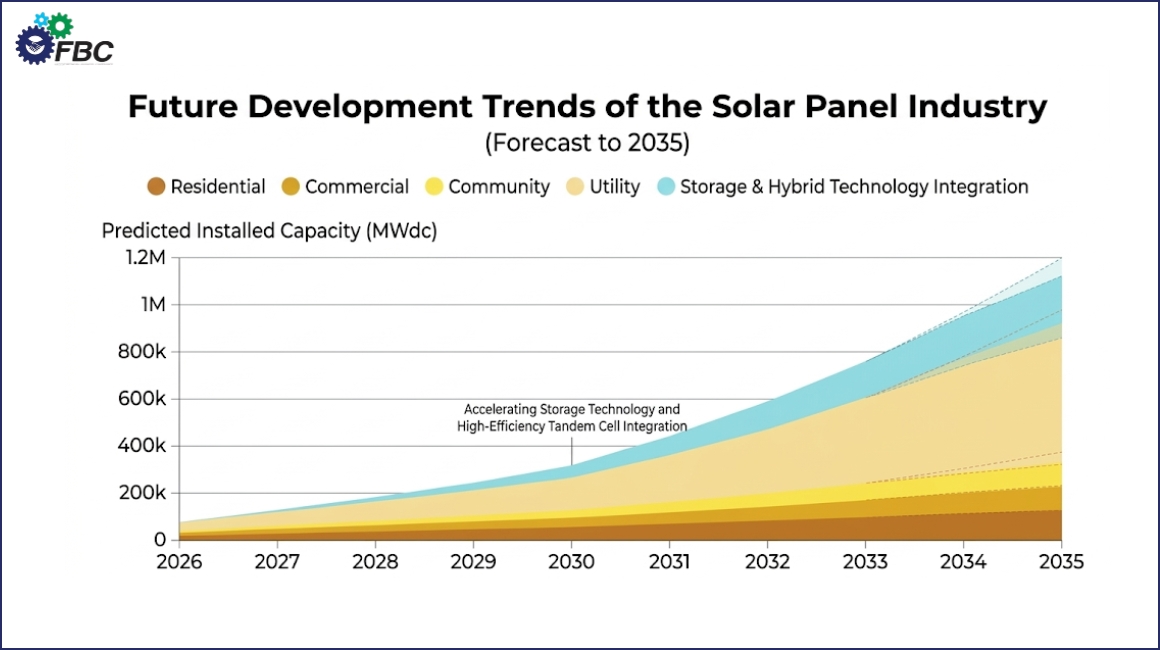
Forecast of future development trends for the solar panel industry from 2026 to 2035
As the global solar panel industry accelerates projected to grow from $253.69 billion in 2023 to $436.36 billion by 2032 at a 6% CAGR, Vietnam has firmly emerged as a premier production hub for 2026. Looking ahead, the industry is set to grow in both absolute demand and complexity, with energy storage and digital control systems playing a bigger role. Industry research shows that solar-plus-storage is becoming the standard configuration for new utility-scale projects. At the same time, a growing share of residential and commercial systems integrates batteries to capture more value from each kilowatt-hour generated.
For Vietnam, this future growth involves three main directions: expanding manufacturing capacity, deepening local supply chains, and moving up the value chain into innovation and system integration. Supported by strong domestic demand under PDP8 and sustained export flows, forecasts suggest that Vietnam’s solar generation and manufacturing capacity will continue to rise through 2030 as buyers worldwide increasingly seek diversified supply sources beyond a single country.
For companies considering Vietnam, this makes 2026 – 2035 a critical strategic window. Capacity is growing, the policy framework for renewables is maturing, and platforms like FBC ASEAN 2026 are making it easier to identify credible partners and evaluate on-the-ground capabilities. Firms that move early can secure better supplier terms, lock in manufacturing slots, and co-develop tailored solutions from industrial rooftops to utility-scale projects and hybrid solar-storage systems.
Frequently Asked Questions (FAQ)
- What kind of industry is solar?
It is a renewable energy and high-tech manufacturing sector dedicated to developing equipment (like photovoltaic cells and modules) that converts sunlight into electricity.
- Who is the largest manufacturer of solar panels?
As of 2026, Chinese corporations such as Tongwei, JinkoSolar, and Longi are the largest global manufacturers, while First Solar leads domestic production in North America.
- How big is the solar industry?
It is a massive, multi-hundred-billion-dollar global market experiencing explosive growth, with annual new installations exceeding a record 600 GW in the 2025–2026 period.
- Who dominates the solar panel industry?
China absolutely dominates the industry, controlling 80% to 95% of the entire global supply chain manufacturing capacity, from raw polysilicon to finished modules.
The solar panel industry in 2026 is marked by strong demand, intense competition, and rapid innovation, and Vietnam has secured a strategic role as a key manufacturing and export hub. Join FBC ASEAN and turn your solar and green manufacturing strategy into concrete partnerships and orders.