 16~18/09/2026
 VEC, Dong Anh, Ha Noi
Understanding how Zaibatsu worked helps modern CEOs, production directors, and business developers see why Japanese partners think in terms of groups, ecosystems, and decades‑long commitments rather than one‑off deals. Join FBC ASEAN in exploring Zaibatsu and building a more open and flexible version of that networking mindset for 2026.
What Is a Zaibatsu?
Before we talk about modern ASEAN supply chains, we need to clarify what a zaibatsu actually was and why it became such a central concept in Japan’s industrialization.
Definition of Zaibatsu
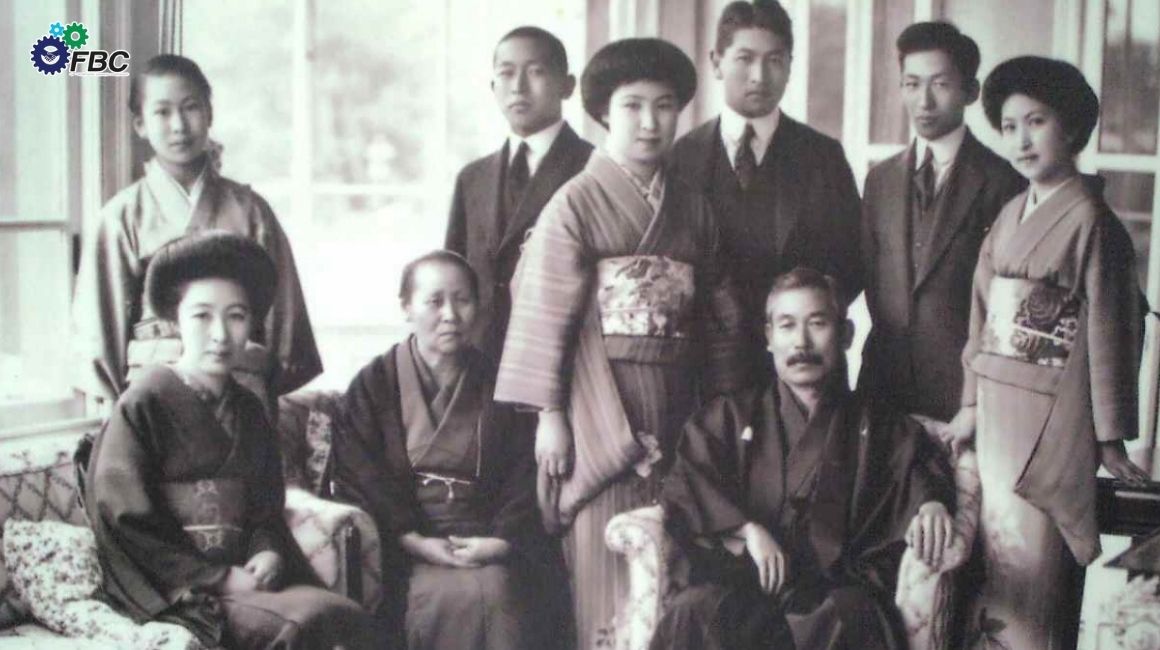
A zaibatsu was a large, family‑controlled industrial and financial conglomerate that dominated key sectors of Japan’s economy from the late 19th century until the end of World War II. Major reference works describe zaibatsu as powerful groups that combined banking, heavy industry, trading, shipping, mining, and insurance into one tightly managed corporate empire
Core Features and Structure
Zaibatsu were built on a clear pyramidal structure: at the top sat a family holding company, beneath it a group bank, and under that a web of industrial and trading subsidiaries across multiple sectors. The holding company (honsha) set strategy and controlled equity stakes, while the group bank mobilized capital from inside and outside the group to fund factories, mines, shipping fleets, and overseas ventures.
Four structural traits are particularly relevant for today’s B2B manufacturers:
- Vertical integration: Zaibatsu often controlled entire value chains, from raw materials to logistics and final export, reducing dependence on external suppliers but also concentrating power.
- Cross‑shareholding: Subsidiaries and affiliates held shares in one another, reinforcing loyalty and making hostile takeovers or sudden exits extremely difficult.
- Internal financing: Group banks prioritized loans and credit lines for member companies, enabling long‑term investment that would be hard to justify on a purely transactional basis.
- Long‑term horizon: Decisions were often made with a decade‑plus view of market development, technology, and national industrial policy, not just quarterly earnings.
Historical Development of Zaibatsu in Japan
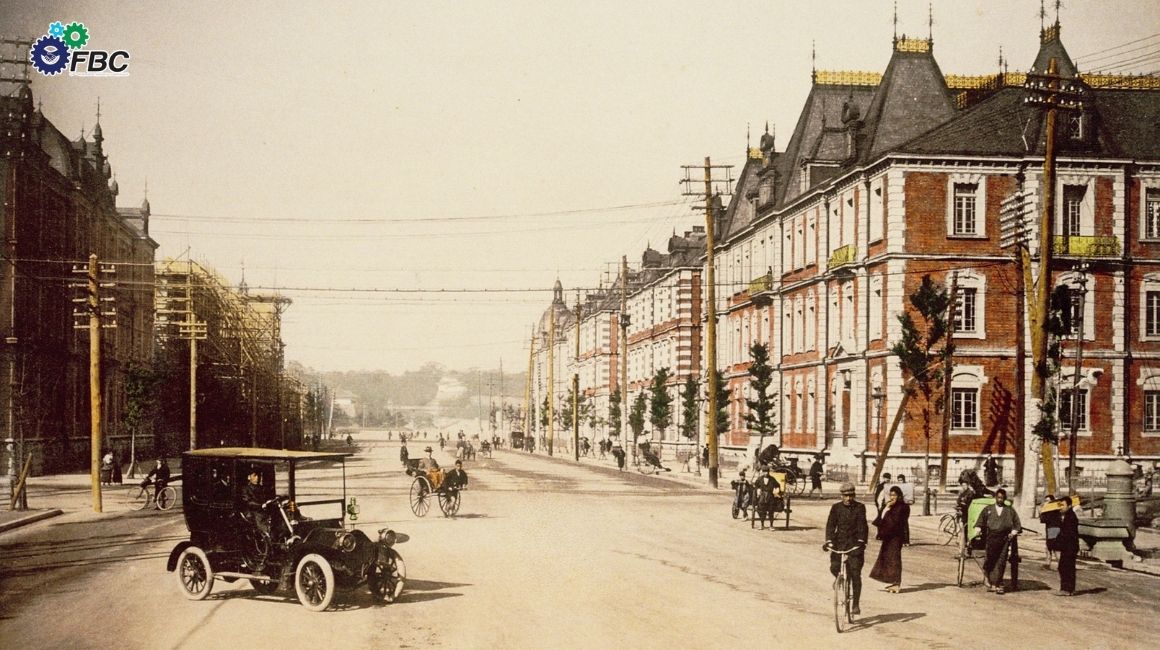
The zaibatsu emerged during the Meiji Restoration as Japan raced to catch up with Western industrial powers. Family-run empires like Mitsui, Mitsubishi, Sumitomo, and Yasuda partnered closely with the state, becoming the backbone of Japan’s industrial and military machine. By the 1930s, these “Big Four” controlled vast sectors from banking to heavy industry, granting them massive influence over national economic policy.
Because their control over supply chains made them vital to Japan’s wartime economy, they became prime targets for the Allies after 1945. US occupation authorities dismantled the zaibatsu by breaking up their holding companies, but the underlying business relationships simply survived and evolved into the looser corporate networks known today as keiretsu.
How is a zaibatsu different from other types of conglomerates?
Once you see zaibatsu as group‑style networks instead of just big companies, it becomes easier to compare them with Western and Asian conglomerate models.
- Western Financial Houses: While groups like the Rothschilds also combined banking and industry to wield immense influence, they were often fragmented across jurisdictions. In contrast, zaibatsu maintained a much tighter, centralized command center with strict family control.
- Korean Chaebol: Conglomerates like Samsung are the closest Asian equivalent, sharing the zaibatsu’s reliance on family leadership, cross-shareholdings, and state-backed industrialization, though they emerged later under different historical conditions.
From Zaibatsu to Keiretsu: Evolution and Key Benefits of Japan’s Corporate Networks
The post-war transition from zaibatsu to keiretsu preserved a lot of the group-centric strengths while softening some of the concentration of power. Keiretsu networks kept the idea of a cluster of firms plus a main bank plus a trading company, but spread ownership more broadly and aligned with Japan’s high‑growth export era from the 1950s to the 1980s.
From a strategic point of view, these corporate networks delivered three benefits that still resonate with global buyers and suppliers:
- Risk sharing and resilience: Companies inside a keiretsu could rely on peer support and bank backing during downturns, making their supply capabilities more stable over the long term.
- Technology diffusion: OEMs and Tier‑1 suppliers shared know‑how, engineering talent, and quality systems throughout the network, accelerating capability upgrades at lower tiers.
- Aligned incentives:By tying financing, procurement, and market access together, networks could pursue long‑term competitiveness rather than short‑term price wins.
For today’s CEOs and production directors, the lesson is not to copy the exact structure but to ask: “How can we architect our own network of banks, suppliers, R&D partners, and platforms so that everyone can invest for the long term?”
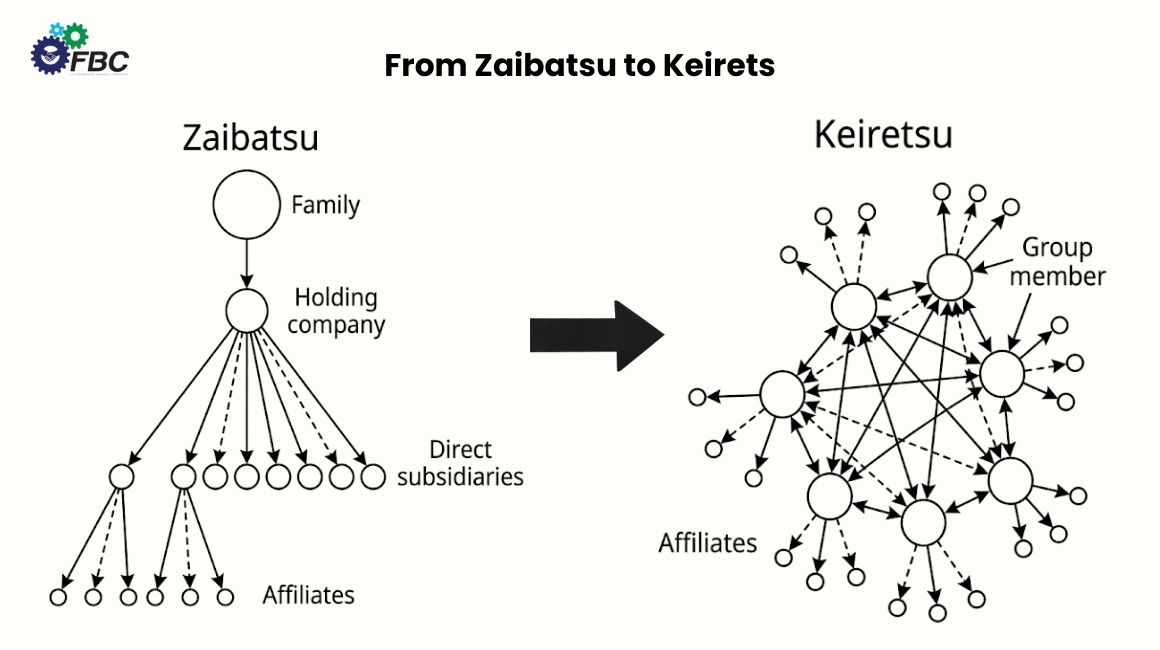
Zaibatsu and B2B Industrial Ecosystems 2026
Looking at today’s industrial landscape, zaibatsu offer a historical blueprint of what a tightly integrated ecosystem can achieve and where it can become too rigid.
Zaibatsu utilized strict vertical integration to control entire value chains across heavy industry, finance, logistics, and trade. This comprehensive control provided large buyers with crucial benefits like supply stability and predictable quality. However, this closed ecosystem inevitably created massive lock-in effects for smaller, dependent suppliers. Consequently, it severely reduced market competition and limited the flexibility to adopt outside technologies.
Internal group banks served as the primary financial engine for these massive Japanese conglomerates. They consistently funded long-term industrial projects, ranging from heavy steel mills to complex shipbuilding. This system provided a reliable source of patient capital that allowed companies to ignore immediate financial pressures. Interestingly, securing this exact kind of patient capital remains a significant hurdle for many modern ASEAN SMEs.
The physical organization of zaibatsu also generated powerful cluster effects by concentrating factories and suppliers near group-owned ports. These dense ecosystems centralize skills and subcontracting, functioning much like modern industrial parks in today’s ASEAN region. Today’s industrial zones similarly bring manufacturers and logistics firms into shared physical spaces for maximum efficiency. The key difference is that modern parks remain open to multiple buyers, preserving healthy competition for smaller firms.
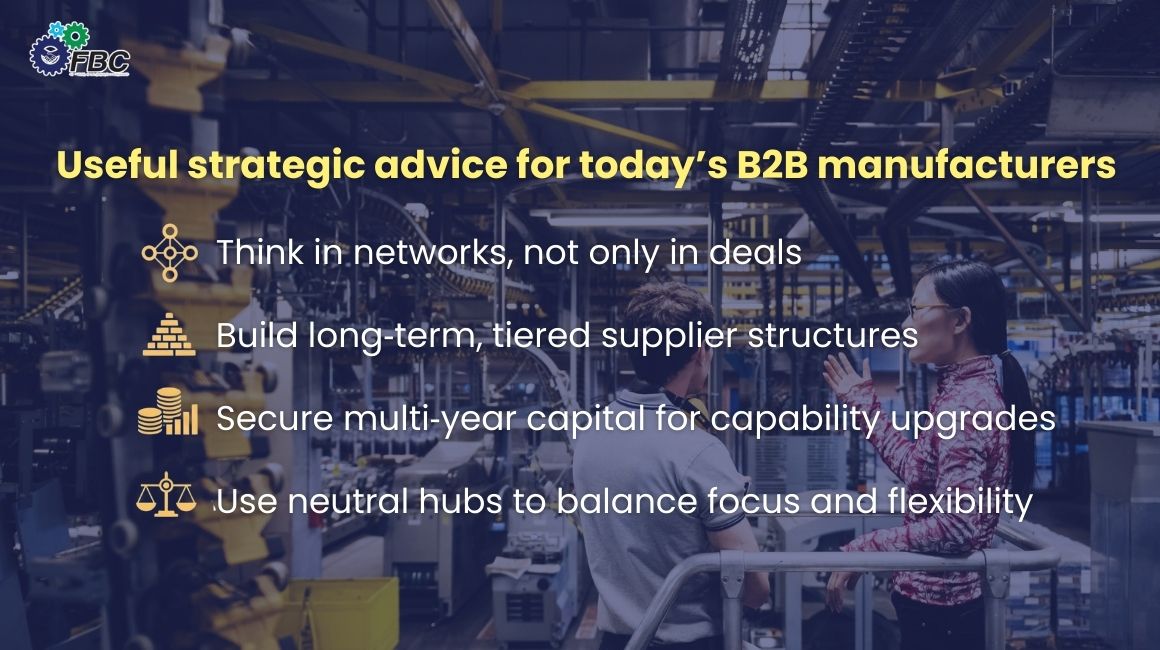
Useful strategic advice for today’s B2B manufacturers
So how can a CEO or production director in Vietnam or ASEAN apply zaibatsu-style thinking without becoming locked into a closed group?
- Think in networks, not only in deals: map your extended enterprise banks, key suppliers, technology partners, logistics providers, and B2B platforms, and treat it as a designed ecosystem rather than a random set of relationships.
- Build long‑term, tiered supplier structures: define clear expectations and roadmaps for Tier‑1, Tier‑2, and Tier‑3 partners (quality, PPM targets, certifications, co‑development roles) the way Japanese networks do.
- Secure multi‑year capital for capability upgrades: negotiate financing and co‑investment with banks or strategic partners that match your investment cycle for new lines, molds, automation, or digital systems.
- Use neutral hubs to balance focus and flexibility: instead of locking yourself into one family network, combine deep anchor relationships with participation in open platforms like FBC ASEAN and EMIDAS to keep options and deal flow open.
In other words, you can borrow the best parts of the zaibatsu mindset, long‑termism, coordination, and deep integration while still staying agile and multi‑connected.
Japan’s Zaibatsu Legacy in ASEAN Manufacturing
The influence of traditional Japanese corporate structures continues to shape modern ASEAN manufacturing, impacting local supply chains in several key ways:
- Enduring Keiretsu principles: Japanese OEMs in regions like Vietnam, Thailand, and Indonesia still rely on traditional supply development methods, emphasizing long qualification periods, strict process control, and persistent relationship building.
- High standards for local suppliers: Entering a Japanese-led supply chain requires demonstrating long-term reliability, continuous improvement, and strict certifications (like ISO or IATF), rather than simply competing on price.
- Shift to open platforms: The industry is actively moving from closed zaibatsu-style networks to neutral platforms (like FBC ASEAN and EMIDAS), allowing local manufacturers to connect with multiple Japanese buyers and technology partners simultaneously.
B2B Marketing Insights Inspired by the Zaibatsu Model
Zaibatsu did not just build factories and banks; they also built powerful brands and group identities that signaled reliability to B2B customers, governments, and financial markets. Group names like Mitsubishi or Mitsui became shorthand for bankable, technically competent, and internationally connected, which made it easier for all subsidiaries to win contracts and access capital.
For today’s manufacturers, there are three practical marketing lessons:
- Make your group identity visible: Even if you are an SME, show your ecosystem key partners, certifications, alliances, and technologies on your website, catalogs, and FBC/EMIDAS profiles so that buyers see more than just a single factory.
- Lead with proof, not only promises: Highlight track record, export experience, lead times, quality metrics, and case studies in sectors that matter to Japanese and ASEAN buyers, such as automotive, electronics, industrial machinery, or energy.
- Align your story with long‑term value: Instead of focusing only on price, emphasize stability, co‑development, and support for digital and green transformation, which are core themes at FBC ASEAN 2026.
In the FBC ASEAN context, effective pre‑event nurturing could include optimizing your EMIDAS profile, sending targeted invitations to pre‑matched buyers, and scheduling 8-12 qualified meetings in advance, while post‑event follow‑up might involve sharing clarifications, cost‑down proposals, or phased qualification plans.
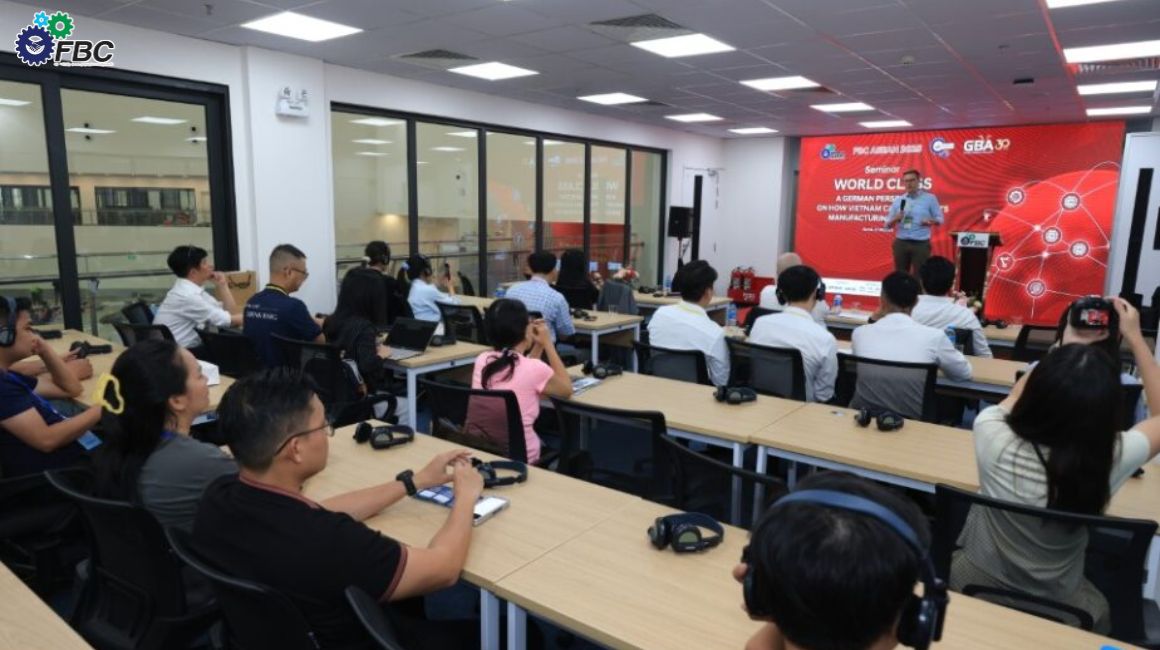
While the formal Zaibatsu have faded into history, their legacy of deeply coordinated, long-term B2B networks continues to drive Japanese manufacturing across ASEAN. Today, business success requires blending that reliable, group-style mindset with open platforms to access global supply chains. For the latest industry updates, supplier matching, and direct sourcing opportunities, follow the FBC ASEAN website today!
If you are a CEO, business development leader, or procurement head interested in how Japan’s zaibatsu legacy still shapes today’s B2B manufacturing networks, FBC ASEAN 2026 is the best place to meet Japanese and ASEAN OEMs, tiered suppliers, and solution providers who operate with the same long-term, ecosystem-driven mindset.
Hosted at VEC Dong Anh in Hanoi as a one-stop sourcing hub, the exhibition connects you with trusted partners across machining, components, industrial services, and digital platforms so you can benchmark costs, capabilities, and relationship models in one trip.
Turn your three days at FBC ASEAN 2026 into three years of strategic partnerships – click the banner now to register your visit as a buyer: